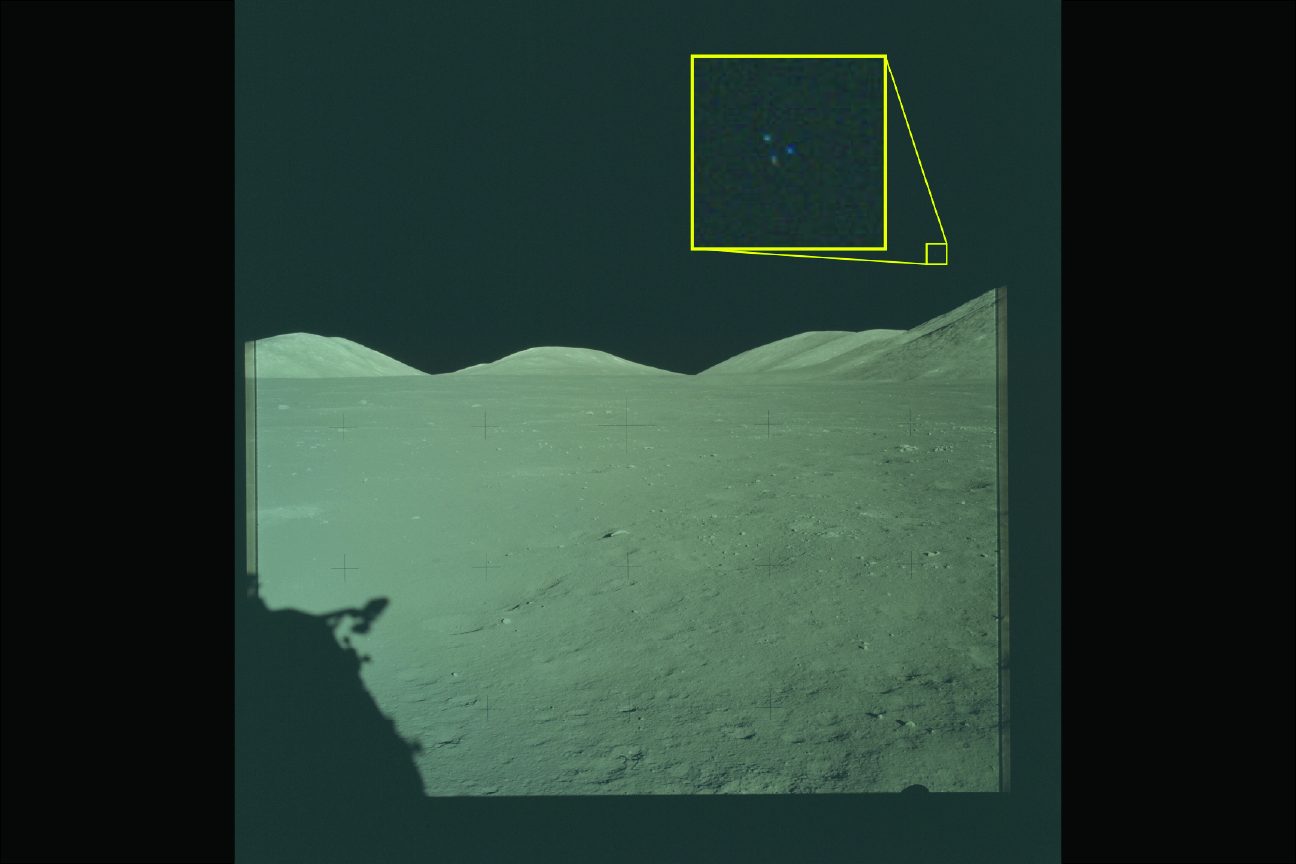
On May 8, 2026, the U.S. Department of War launched the Presidential Unsealing and Reporting System for UAP Encounters (PURSUE) and released its first batch of declassified UAP files at war.gov/UFO. The first tranche initially comprised 132 files; with the video tranche added May 9, independent inventories place the full first release at approximately 160-162 files (~3.7 GB), including Apollo 12 and Apollo 17 mission imagery, FBI infrared stills, U.S. Indo-Pacific Command UAP imagery near Japan, 28 "Unresolved UAP Report" videos from CENTCOM, EUCOM, and Indo-Pacific Command areas of responsibility (2020-2026), and a multi-asset image carousel covering decades of unresolved UAP cases.
Second tranche — May 22, 2026: a core release of 64 files (6 PDFs, 7 audio files, 51 videos) per CBS News, with some outlets reporting a higher total including supporting assets.
Third tranche — June 12, 2026: 72 files in total, comprising (per CBS News) 53 documents and 10 images alongside 6 videos and 3 NASA audio recordings, drawn from the CIA, FBI, NASA, the Department of Defense, and other agencies, and dating from the 1940s to the present. Notable contents include orb-like object videos with "artistic interpretation" recreations, Apollo 16 mission debrief audio, a Pentagon-cited set of 209 reported "green orbs," "discs," and "fireballs" near a military facility, and — per a report dated June 5 attributed to AARO director Dr. Jon Kosloski — an assessment that roughly 40% of analyzed cases lack a reasonable explanation and remain unresolved. The release also surfaced a CIA internal-history admission that secret U-2 and OXCART spy-plane flights accounted for more than half of all UFO reports during the late 1950s and 1960s.
Fourth tranche — July 10, 2026: 40 files (14 documents, 19 videos, 4 audio files, and 3 images) drawn from the Pentagon, NASA, the CIA, the FBI, and the Department of Energy, resuming the rolling-release cycle after a roughly four-week pause attributed to the shift from already-public material to newly declassified records.
Fifth tranche — August 7, 2026: 41 files (a mix of documents, images, and videos) drawn from the Pentagon, the FBI, the CIA, the State Department, and the Executive Office of the President, with records spanning 1950 through 2026. Reported contents include an FBI interview summary in which a former military pilot described a large, silent triangular object observed over Afghanistan in 2002; a September 2021 Gulf of Oman incident in which U.S. Special Operations personnel aboard an AC-130J gunship reported approximately 25 encounters with objects described as "cold orbs"; and a 2025 U.S. Central Command clip of an object crossing a populated area in the Middle East. Both the Gulf of Oman and CENTCOM incidents remain unresolved by AARO.
Sixth tranche — September 18, 2026: 71 files — 55 documents, 15 videos, and one audio recording — 67 from the Department of War and, for the first time, four from local law enforcement in Colorado, with records spanning 1952 to 2025. The release centers on the Defense Intelligence Agency's Advanced Aerospace Weapon System Applications Program (AAWSAP, 2008–2012), including 37 "Defense Intelligence Reference Documents" on speculative topics such as warp drives, wormholes, and negative-mass propulsion — all previously public via FOIA, now released with formerly withheld details — and a 2010 study examining injuries to three engineers following an unexplained aerospace event. The Pentagon's accompanying notes state the reference documents "should not be read as implying current validation of the concepts discussed." Also included: an hour-long 1952 recording of Air Force Captain Edward Ruppelt, who went on to run Project Blue Book.
Seventh tranche — October 23, 2026: 28 files, all PDF documents per CBS News, the smallest batch so far. It adds further AAWSAP-era records from the program's contractor, Bigelow Aerospace Advanced Space Studies, including a December 2008 "Project Capella" data-warehouse proposal, progress reports describing a planned secure vault for "recovered hardware and biological samples," and a 2010 report on Utah's Skinwalker Ranch. It also includes FBI and AARO records of a June 2026 sighting by federal agents of a silent, delta-shaped object near a national security site in the western U.S., which AARO says warrants further investigation, along with historical sightings from the 1940s and 1950s and documents on how NASA and the Defense Department would handle suspected space-vehicle fragments.
Consistent with prior tranches, reporting noted no conclusive evidence of extraterrestrial life or government cover-up, and AARO's standing position remains that it has found no verifiable evidence of extraterrestrial activity. The interagency effort coordinates the White House, Office of the Director of National Intelligence, Department of Energy, AARO, NASA, FBI, and additional intelligence agencies. Defense Secretary Pete Hegseth, then-DNI Tulsi Gabbard, FBI Director Kash Patel, and NASA Administrator Jared Isaacman all issued statements supporting the first release. With seven tranches now public across more than five months, the rolling-release framework is a functioning, recurring process rather than a stated intention, with the Department stating that additional files will continue to be released on a rolling basis. On May 9, the Department of War announced it has actively opened a case to reanalyze the Apollo 17 anomaly using the original film. In early October, a New York Times review of the record and a Boston Globe essay by science-council member Michael Shermer likewise reported no verifiable evidence of extraterrestrial contact. For the institutional context, see our UAP disclosure timeline.
The declassified files are publicly available via the Department of War's dedicated portal — no clearance required.
View Files at war.gov/UFO →What Was Released
The first PURSUE tranche, made public via the Department of War's dedicated portal at war.gov/UFO, includes never-before-seen materials alongside previously redacted files now available in fuller form. Key items in the initial release:
Apollo-era imagery. Photographs from the Apollo 12 and Apollo 17 lunar missions showing unexplained lights and shapes against the lunar terrain. One Apollo 17 image highlights three lights visible above the moon's surface. A transcript of Apollo 17 communications between operators captures the moment of observation: "Now we've got a few very bright particles or fragments or something that go drifting by as we maneuver."
FBI infrared stills. Black-hot infrared imagery from September 2025 showing unidentified objects over the western United States.
U.S. Indo-Pacific Command imagery. A football-shaped UAP captured by U.S. forces in the Indo-Pacific theater, near Japan.
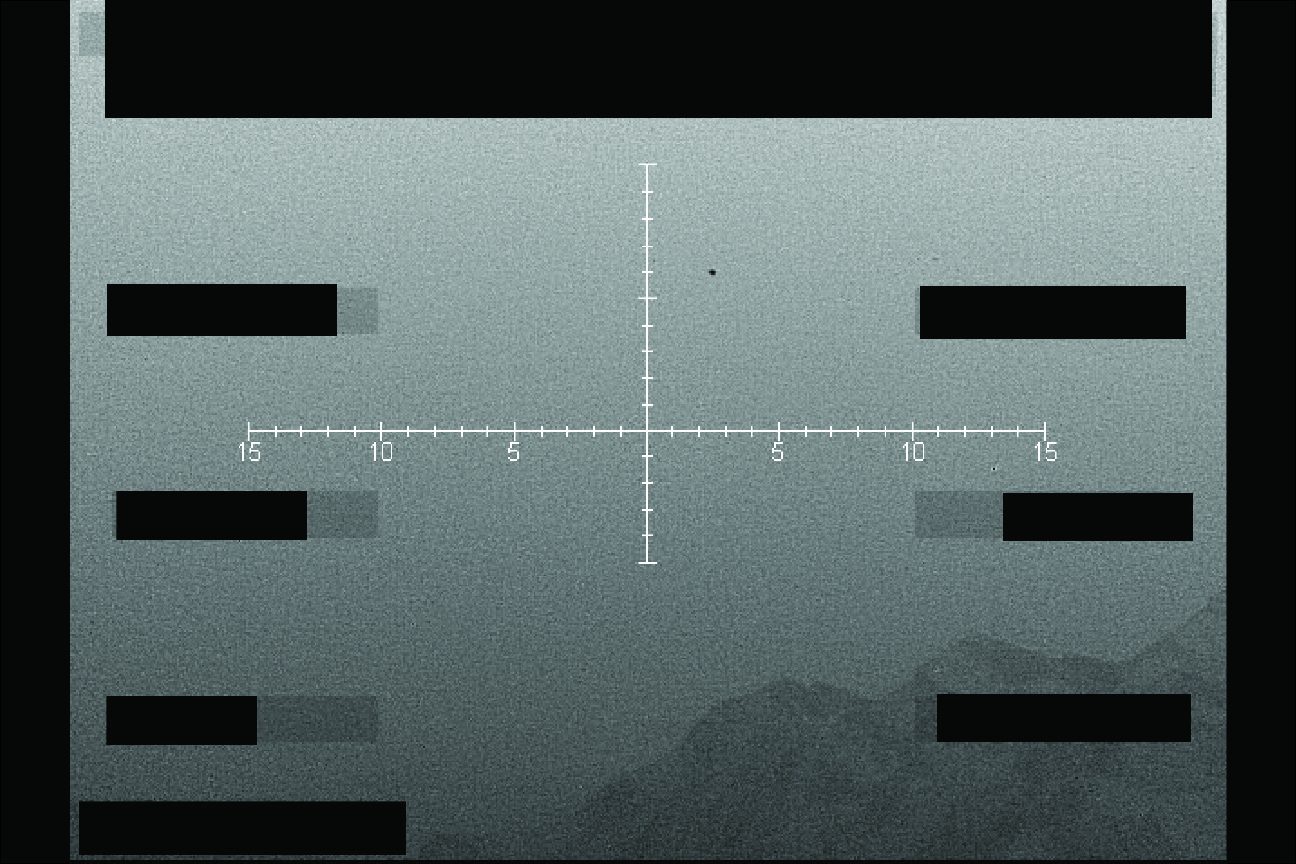
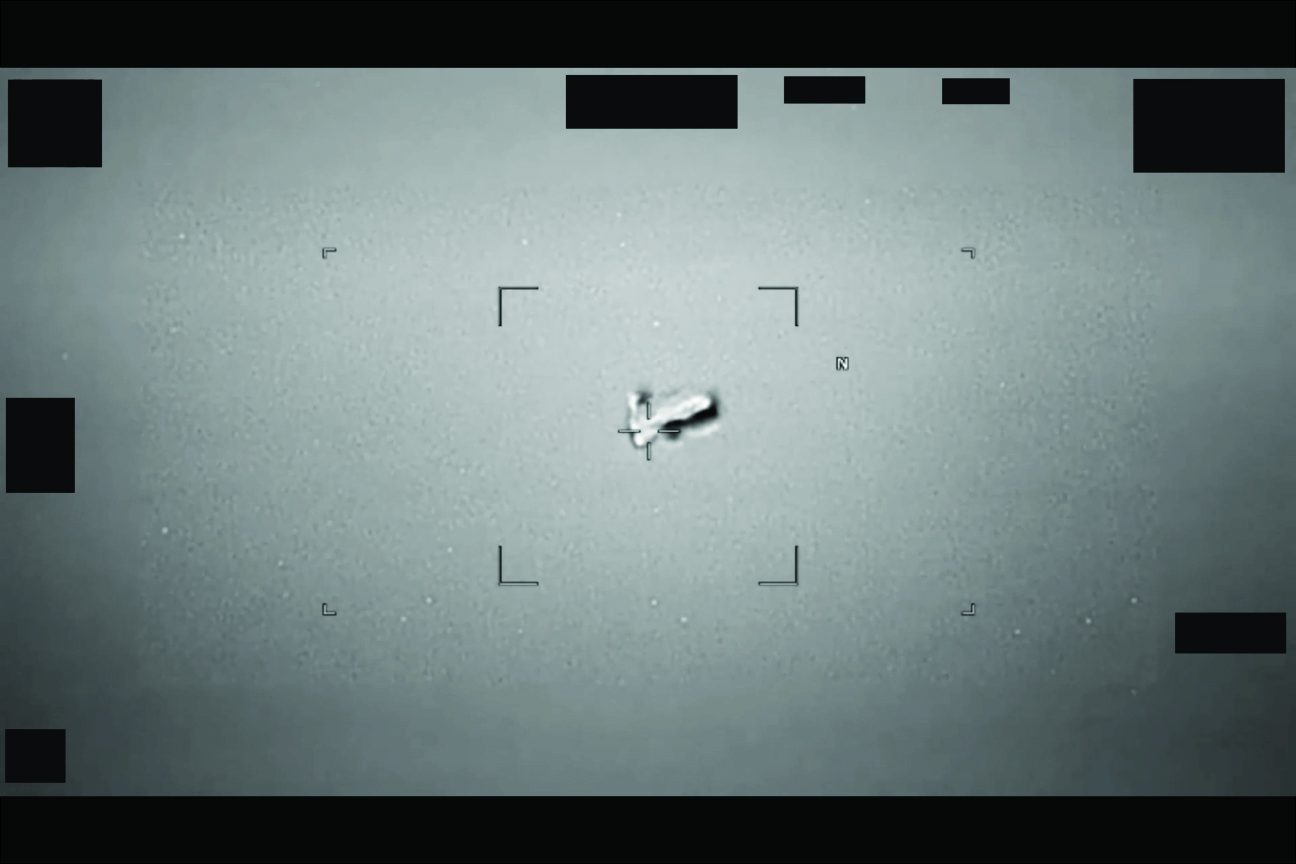
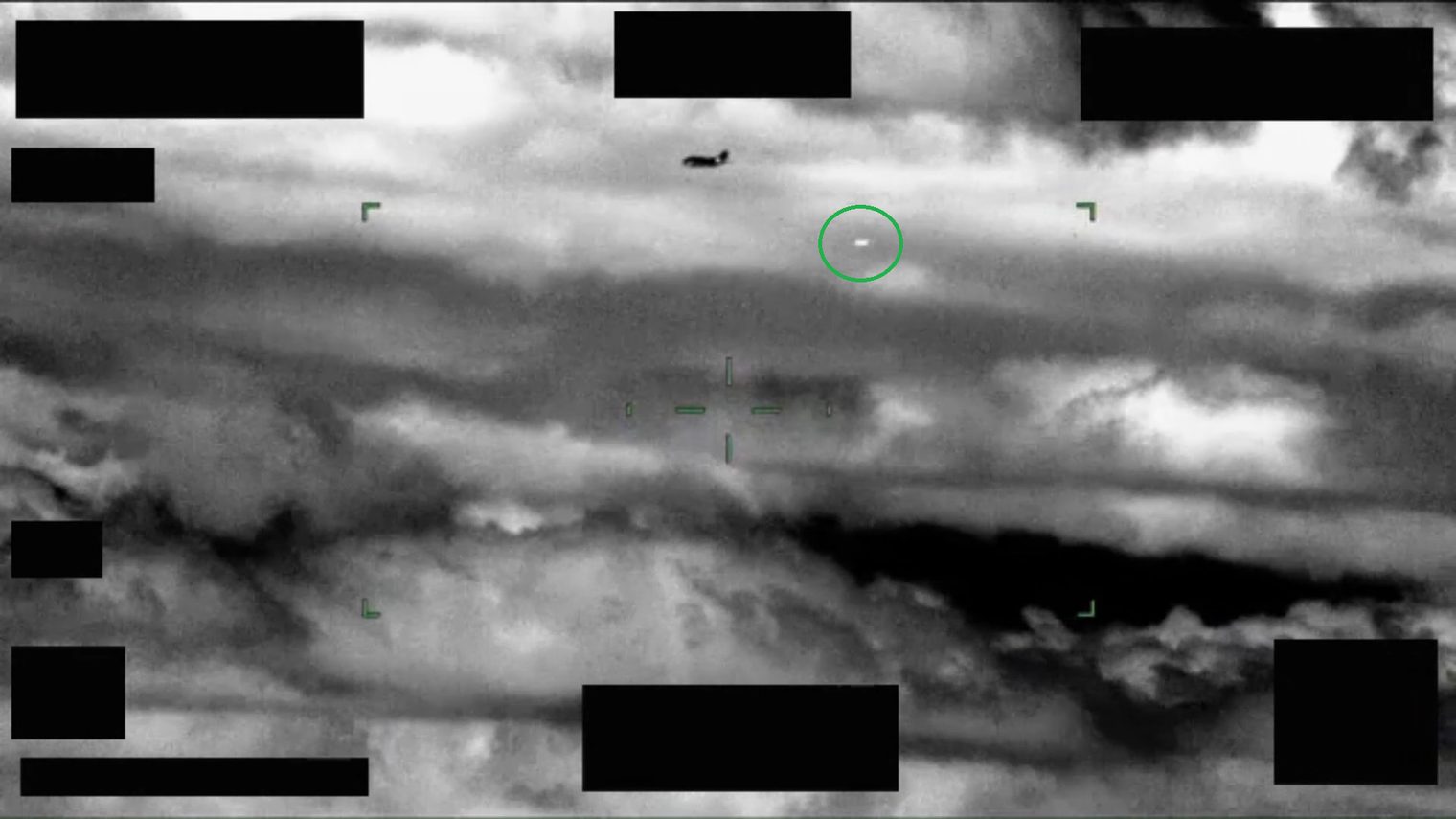
Department of War 17-asset carousel. A curated archive of UAP-related imagery covering decades of unresolved military encounters.
The Department of War noted that "all of the files were reviewed for security purposes" but that "many of the materials have not yet been analyzed for resolution of any anomalies" — meaning the government is releasing the raw record without representing that anomalies have been adjudicated.
Official Statements
Isaacman has since described his own view. In a September 25, 2026 interview, he said he approaches the question open-minded but leans toward a natural phenomenon or possible foreign technology, a "Sputnik moment," adding that "if it's aliens, I think NASA should have a seat at the table." He announced no new NASA program and did not say he had seen evidence either way.
Primary Sources
All PURSUE material is published by the U.S. government and is available directly from the official portal. Readers are encouraged to examine the primary records rather than rely on secondary characterizations — including this page's. The Department of War maintains a searchable database filterable by release, agency, and file type, and publishes each tranche as downloadable document and video bundles.
- PURSUE portal and searchable database — all releases to date, filterable by agency, file type, incident date, and location.
- Release 07 (October 23, 2026) — the most recent tranche, including BAASS contractor records and the black-triangle report. Official press release.
- Release 06 (September 18, 2026) — including the AAWSAP documents. Official press release.
- Key Release 06 documents: AAWSAP Statement of Objectives (July 2008) · 2010 DIRD on field effects on human tissue · Ruppelt 1952 presentation transcript
- Release 05 (August 7, 2026)
- Release 05 documents (130 MB) · Release 05 videos (513 MB)
- AARO.mil — the All-domain Anomaly Resolution Office, including its statutorily mandated annual reports on resolved cases.
A note on the imagery accompanying Release 05: of the nine images featured in the official slideshow, eight are labeled by the Department of War as digital renderings — illustrations produced from witness descriptions rather than sensor data or photographs. They depict what observers reported seeing; they are not themselves evidence of what was present. The video bundle contains the sensor and camera footage, including thermal imagery. This distinction is easy to lose in secondary coverage and is worth carrying into any assessment of the release.
Live Updates
No eighth tranche has been released. The week after the seventh release brought its sharpest on-record pushback. In an interview with Fox News Digital published November 1, Sean Kirkpatrick, AARO's first director, called the tendency to treat the agents as unimpeachable witnesses "a classic case of authority bias," noted the absence of photographs or other supporting data, and compared some triangle sightings to reports of the F-117 stealth aircraft before it was public. "None of the data that we saw and reviewed and analyzed matches an alien hypothesis theory," he said. "When we say a case is unresolved, it generally means there is no data."
He also made a claim that, if accurate, bears directly on how the releases should be read: that "Pentagon leadership had told AARO to remove all of the resolution language and put these cases out as unresolved," leaving people to "make up their own mind." He did not say when the directive was issued, who issued it, or which cases were affected, and the Pentagon has not addressed the claim; a War Department official told Fox it is "not providing any comment or assessment on the files overall or on any specific file." Separately, in a written response to Paradigm on October 29, Kirkpatrick said he had investigated the Lockheed-related allegations repeated in Jay Stratton's memoir with Lockheed's chief technology officer and found them connected to people who "had both misled the company" and "were trying to make money on aerospace tech unconnected to aliens."
Inside the science council, the mood is impatience rather than revelation. On CBS's Sunday Morning on November 1, recently added council member Ryan Graves, a former Navy pilot, said "what's being released is not satisfactory to me," and Loeb said "the worst that can happen to a detective is that the detective is starved of data." Kirkpatrick's resolution-language claim is unverified, but together with the Pentagon's no-comment posture it reinforces the reading this page has taken throughout: an "unresolved" label in the archive is a statement about the available data, not about the object. See the full disclosure timeline →
The Department of War published the seventh PURSUE tranche on war.gov/UFO (Release 07), 35 days after the sixth. In an official statement, Chief Pentagon Spokesman Sean Parnell said the Department "will release additional files on a rolling basis" and is "actively working on the next release." It is the smallest batch so far: CBS News counted 28 files, all PDF documents, bringing the archive to nearly 480 files across seven releases.
The most substantive material continues the AAWSAP thread from September. The release adds records from Bigelow Aerospace Advanced Space Studies (BAASS), the contractor that carried out the DIA's 2008–2012 program, including a December 2008 "Project Capella" proposal by Documatica Research for a data warehouse to capture, classify and retrieve reports of unusual aerial phenomena, a November 2010 summary of BAASS's UAP analysis capabilities, and hundreds of pages of progress reports. One progress report states that BAASS needed a highly secure underground vault to "pursue and acquire recovered hardware and biological samples from the corporate world and/or from private individuals and groups located elsewhere, including in Brazil," and sets out a design for a 5,000-square-foot facility under 15 to 20 feet of earth. The batch also includes a 2010 overview of a BAASS investigation at Utah's Skinwalker Ranch, then owned by Robert Bigelow, whose company held the AAWSAP contract; according to Newsweek, investigators interviewed 25 witnesses and collected four hair samples, which DNA analysis traced to a dog and a raccoon.
The most-reported modern item is a June 2026 incident documented in two records: the agents' signed FBI statement (FBI-UAP-D043) and an AARO memorandum summarizing investigators' debrief of them (DOW-UAP-D176). After sunset, federal agents near a national security site in the western U.S. saw what the FBI statement calls "a substantial, nonreflective, dark black triangular object most resembling a delta wing drone," with a wingspan of "approximately nine to fifteen feet," rise 200 to 300 feet above a ridgeline in a "slow, controlled, perfectly vertical ascent," hover for about 20 seconds, and then leave at a speed they compared to a military fighter jet. The AARO memo states that the "ascent occurred in absolute acoustic silence"; through an infrared scope the object "appeared hotter than ambient temperature with a completely consistent thermal signature," with no visible exhaust. A ground survey the next morning found no wreckage. No instrument measured its speed: the widely reported 1,800 mph figure is a calculation from witness estimates, and the two records differ on timing, with the FBI statement putting the sighting at about three seconds and the AARO memo describing a sequence of more than 30. AARO said the case "warrant[s] further investigation due to the close alignment of the phenomena's reported morphological features" with other reports from the western U.S., and other outlets report three further accounts in the batch of black triangles over sensitive military sites. Avi Loeb, who chairs the White House-tasked science council, wrote that "those observations do not establish the nature of the UAP" and that the report lacks "a measured speed or raw sensor recordings." Historical material includes a 1953 report of a metallic, elliptical object over Sweden, a 1957 sighting in Saudi Arabia, and documents on how NASA and the Defense Department would handle suspected fragments of space vehicles.
The counterweight matters most for the vault passage. It records what a contractor said it wanted to be able to do; reporting on the release has identified nothing showing that any hardware or biological material was obtained. Coming ten days after former UAP Task Force director Jay Stratton's memoir alleged that defense contractors hold recovered craft, the passage will be read in that light, but it is a plan from the AAWSAP era, not evidence. AAWSAP's existence has been public since 2017, and AARO's March 2024 historical report found no verifiable evidence that government agencies or private companies possess extraterrestrial technology. An unresolved case, or one that "warrants further investigation," means the government lacks the data for a determination, not that the object was anomalous. AARO's standing position is unchanged. See the full disclosure timeline →
No seventh tranche has been released. On October 2, The New York Times published the first extended look at the White House-tasked UAP Science Advisory Council chaired by Harvard's Avi Loeb, alongside its own review of the record. After examining this year's six releases and compiling a database of about 155,000 unique pages of UAP records from seven countries, the paper reported "no definitive signs" of extraterrestrial visitation.
The council's members are openly divided on what lies behind the phenomenon. Stanford's Garry Nolan told the Times that "there's something nonhuman here, and it's been here for a long time," and retired Rear Admiral Tim Gallaudet described objects "not of our origin." Skeptic Michael Shermer said many sightings are "stuck in this kind of low-information zone," and Loeb acknowledged the core limitation: "We can't go back in time and improve the data." Outside the council, Penn State historian Greg Eghigian found "nothing especially new or earth-shattering in the materials," and former AARO director Sean Kirkpatrick called the council "clearly meant to distract and push fringe theory."
On October 8, Shermer set out his own assessment in The Boston Globe: "So far, in my opinion, we have found no verifiable evidence of contact with or discovery of extraterrestrial intelligence." He disclosed that the council has met weekly by video since July to review the released videos, photographs and documents, and pointed to an analysis of 112 PURSUE sensor videos by fellow members Jacob Haqq-Misra and NASA Goddard scientist Ravi Kopparapu (writing in a personal capacity). With range and sensor data redacted or absent, they found, the footage cannot distinguish "a bird flying at close range" from "a large craft traveling at Mach 5 a kilometer away"; the videos "in their present form cannot fully resolve unidentified cases or conclusively indicate anomalous velocities."
The council's members disagree about the phenomenon itself, but the analytical work they have published so far points one way: the record as released cannot settle the question, and the data that could (range, sensor geometry, unredacted footage) has not been made public. The council is advisory, works only with unclassified material, and has issued no formal findings. See the full disclosure timeline →
The Department of War published the sixth PURSUE tranche on war.gov/UFO (Release 06). Per CBS News, the batch comprises 71 files — 55 PDF documents, 15 videos, and one audio recording — 67 provided by the Department and, for the first time in the program, four submitted by local law enforcement in Colorado. Sixty-four of the 71 files contain redactions; document dates span 1952 to 2025. The release arrived four days after the Department's legal waiver for UAP disclosures, and 42 days after the fifth tranche — the longest interval in the program to date.
The centerpiece is a set of documents from the Advanced Aerospace Weapon System Applications Program (AAWSAP), established by the Defense Intelligence Agency in 2008 and terminated in 2012, whose stated objective was to understand "the physics and engineering" of advanced aerospace weapon applications "as they apply to the foreign threat out to the far term, i.e., from now through the year 2050." The release includes the program's July 2008 Statement of Objectives and 37 "Defense Intelligence Reference Documents" (DIRDs) on topics including warp drives, wormholes, antigravity, negative-mass propulsion, and invisibility cloaking. All 37 DIRDs have been publicly available for years through Freedom of Information Act releases; the September 18 versions restore some previously withheld details, such as the names of the DIA offices that produced them. The Pentagon's own accompanying notes are explicit that the DIRDs are "best understood as reference and synthesis products rather than as original research" and "should not be read as implying current validation of the concepts discussed."
The single most-discussed document is a 38-page 2010 DIRD titled Anomalous Acute and Subacute Field Effects on Human Biological Tissues, which analyzed "evidence of unintended injury to human observers by anomalous advanced aerospace systems." It describes three "antennae engineers" who experienced an unexplained aerospace-related event and subsequently suffered skin heating and redness, hair loss, and — in one case — "signs of radiation illness" and, over several years, "signs of malignant transformations." The study did not identify the source of the exposure. Its analytical frame is conventional radiofrequency injury: the author compared the three cases against 42 published and roughly 300 unpublished incidents of known-source RF injury, and offered as a hypothesis that "some advanced systems are already deployed, and opaque to full US understanding" — language consistent with undisclosed terrestrial systems as much as with anything else. The document is a contractor synthesis from 2010, subject to the Pentagon's blanket disclaimer above.
Other contents follow the established pattern. Most videos are grainy military sensor footage of fast-moving unexplained objects: a 2022 Middle East encounter with 1–2 meter objects "flying spora[d]ically" at 80–180 mph, and a 2025 Middle East video of "six small spherical objects" that "seemed to be agile" and were "frequently changing direction," both unresolved. The four Colorado law-enforcement clips are partially blurred cellphone footage from October 2023 of a "silent" phenomenon with "red, blue, and green flashing lights." Historical material includes an hour-long 1952 audio recording and transcript of Air Force Captain Edward J. Ruppelt — who would go on to lead Project Blue Book — explaining that of roughly 800 reports investigated, "about 20% are very good reports offered by very reliable people and … just absolutely no conclusions can be drawn." Several additional Project Blue Book files are included.
The counterweight is stated by the Department itself in this release more explicitly than in any prior tranche. AAWSAP's existence has been publicly known since 2017, its reference documents have circulated for years, and the Pentagon has now released them with a written disclaimer that they validate nothing. AARO's standing position is unchanged: no verifiable evidence of extraterrestrial activity or technology. What the release adds to the record is institutional context — the program's stated objectives, its organizational provenance, and the government's own characterization of its output — rather than new evidence. See the full disclosure timeline →
The Department of War announced, in an official press release, a targeted legal waiver authorizing all current and former DoW service members, civilian personnel, and contractors holding UAP-related National Defense Information to disclose it directly to designated PURSUE representatives. The waiver "supersedes civil and administrative enforcement provisions" of both nondisclosure agreements and Special Access Program indoctrination agreements, "strictly for communications directed to the PURSUE team." It is the Department's implementation of the July presidential directive, paralleling the ODNI memorandum that covered the intelligence community.
The SAPIA provision is the substantive addition. Individuals claiming knowledge of compartmented UAP programs have consistently cited special-access indoctrination terms — not ordinary NDAs — as the legal barrier, and the release acknowledges this directly. The scope is unchanged from July: disclosures flow to PURSUE for "systematic review, security evaluation, and potential declassification" — a government channel with no commitment to public release. The measure removes a stated obstacle; whether it produces anything is now a testable question. Within a week, three prominent claimed witnesses — Grusch, Borland, and Brown — publicly petitioned the President for a broader waiver permitting disclosure to the public rather than to PURSUE, and none has stated that he has used the channel now open to him. The pre-waiver baseline is small: AARO’s FY2025 annual report counted seven individuals, over the twelve months to May 30, 2025, whose claims warranted a follow-on interview. See the full disclosure timeline →
The Department of War published the fifth PURSUE tranche on war.gov/UFO (Release 05). Per CBS News, the batch comprises 41 files — a mix of documents, images, and videos — drawn from the Pentagon, the FBI, the CIA, the State Department, and the Executive Office of the President, with the oldest records dating to 1950 and the most recent to this year. In a statement, Chief Pentagon Spokesman Sean Parnell said the Department "will release additional files on a rolling basis" and that the Department and its agency partners are "actively working on the next release."
Reported contents include an FBI interview summary in which a former military pilot described a large, silent triangular object that blocked out the stars over Afghanistan in 2002; a September 2021 incident over the Gulf of Oman in which U.S. Special Operations personnel aboard an AC-130J gunship reported approximately 25 encounters with objects described in an intelligence report as "cold orbs" flying between 250 and 1,300 mph in formation, maneuvering aggressively, and appearing to react after the aircraft fired its main cannon; a 2025 U.S. Central Command clip showing an object crossing a populated area in the Middle East; and an FBI account from a former Pentagon employee describing a nearly translucent triangular object over his Colorado home in October 2023. The Gulf of Oman and CENTCOM incidents both remain unresolved by AARO. The release also contains FBI-created renderings based on firsthand witness accounts.
The counterweight remains consistent with every prior tranche. CBS News characterized the bulk of the release as "the type of grainy videos that have been the hallmark of past disclosures," and AARO's standing position is unchanged: it has found no verifiable evidence of extraterrestrial activity or technology. AARO director Dr. Jon Kosloski put it directly in an August interview with TIME: "Great claims require great evidence, and the evidence just isn't there yet." Unresolved is not equivalent to anomalous — AARO's FY2025 annual report attributed the substantial majority of its resolved caseload to balloons, birds, satellites, aircraft, drones, and satellite flaring.
Distinct from the PURSUE releases, the All-domain Anomaly Resolution Office published its congressionally mandated Fiscal Year 2025 Consolidated Annual Report on UAP, covering June 2024 through May 2025. Its findings are predominantly prosaic: of 319 reports received, 114 were resolved as balloons, birds, satellites, aircraft, drones, and single instances of a rocket launch and a manned jet pack, while a new 3D modeling capability attributed 238 reports to satellite flaring. Nine reports were flagged for further analysis, and AARO reiterated that no case it has resolved indicates advanced foreign capabilities or breakthrough technologies in any domain.
Notable open items include a single maritime case in which U.S. Navy assets off the Virginia coast reported roughly 100 airborne objects and two likely uncrewed surface systems — under active investigation — and two cases of electronic or avionic interference near operational aircraft, causation undetermined. AARO also noted 50 notifications of uncrewed aerial systems near nuclear infrastructure and launch sites (up from 18 the prior year), none classified as UAP, and acknowledged that a "lack of timely and actionable sensor data continues to constrain" its ability to resolve cases. The report was published several months later than the customary annual cycle. See the full disclosure timeline →
The U.S. military released the fourth PURSUE tranche on war.gov/UFO (Release 04). Per CBS News, the batch comprises 40 files in total — 14 documents, 19 videos, 4 audio files, and 3 images — drawn from the Pentagon, NASA, the CIA, the FBI, and the Department of Energy. The release resumes the rolling-disclosure cycle after a roughly four-week gap following the June 12 third tranche. That pause had prompted speculation the program was stalling; ahead of this release, Mike Gold — a former member of NASA's UAP independent study team — characterized the delay as a transition rather than a halt: the earlier tranches had drawn largely on already-public or "low-hanging" material, while the ongoing work involves the slower process of formally declassifying still-classified records.
Notable contents identified in reporting (NewsNation, The Hill, The Debrief) include: a 2020 Atlantic Ocean video of a blob-shaped object with narrower filaments dangling beneath it, described as matching long-rumored "floating brain" or "jellyfish" UAP footage; a 2023 Yellow Sea video, nearly five minutes long, in which a U.S. military platform's electro-optical and infrared sensor footage appears to progressively degrade over the course of the encounter; a 2019 "Range Fouler" debrief over the Eastern United States in which a U.S. aviator described an object's flight characteristics as "unlike anything [they] had seen" in 28 years of Air Force and Navy service; and a 2024–2025 Indo-Pacific Command series including an object over the Yellow Sea described as "an area of contrast resembling a six-pointed star." Historical documents include a 1949 conference at Los Alamos on "green fireball" sightings attended by prominent physicists (some of whom had worked on the Manhattan Project), a 1948 Project Sign document compiling roughly 100 reports from 1947–48, and a 1996 STS-80 NASA image of a triangular object photographed from Space Shuttle Columbia.
The sober counterweight is important and comes from within the UAP-research community itself: as The Debrief summarized, most of the new videos "leave much to the imagination" — small, blurry objects captured on multi-sensor targeting systems — and to date none of the PURSUE material provides clear examples of objects attributable to unknown aircraft or to unusual or advanced technologies. Consistent with all prior tranches, reporting noted no conclusive evidence of extraterrestrial life or government cover-up; AARO's standing position remains that it has found no verifiable evidence of extraterrestrial activity or technology. (Note: a separately circulating claim that "China and Russia may have retrieved objects," cross-linked in some coverage, is an unsourced third-party assertion and is not part of the tranche's contents.)
Show earlier updates — program launch and first two tranches (May 8–22, 2026), 18 entries

Background and Institutional Context
The May 8 launch was the culmination of an extended escalation through 2026. President Trump's February 19 directive ordered the Department of War to begin reviewing and declassifying UAP records. The ODNI confirmed in March that declassification was imminent. Rep. Anna Paulina Luna demanded 46 specific UAP video files by April 14; the Pentagon missed the deadline. On April 15, a War Department official confirmed AARO was coordinating with the White House to release "never-before-seen" UAP information. On April 29, Luna stated on the record that she had personally viewed evidence in a SCIF "of nonhuman origin and creation." On May 5, FBI Director Patel publicly confirmed an active interagency process. On May 8, that process produced its first public output.
The release went through war.gov/UFO, establishing that as the operative public channel for the program's rolling declassification. For the comprehensive chronology, see our UAP disclosure timeline.
What This Means
The PURSUE program represents the first formal, multi-agency, public-facing declassification framework specifically built for UAP material. Unlike prior piecemeal releases — the 2020 Navy infrared videos, scattered FOIA disclosures, AARO summary reports — PURSUE consolidates the disclosure architecture under a single named program with rolling releases, a dedicated portal, and Cabinet-level coordination across the Department of War, ODNI, DOE, AARO, NASA, FBI, and additional agencies.
The substance of the first tranche is mixed. Some materials are genuinely new; others are previously known but now available without redactions. Apollo-era imagery and infrared stills are evidentiary, not conclusive — the government has not represented that the released materials prove non-human origin. Defense officials have explicitly noted that "many of the materials have not yet been analyzed for resolution of any anomalies."
What is unambiguous is that the institutional posture has shifted. A formal program now exists. A dedicated portal is live. More tranches are scheduled. Whether subsequent releases yield definitive answers — or whether PURSUE remains a vehicle for managed transparency around unresolved cases — will define the disclosure trajectory through the remainder of 2026.
Related Coverage
For the comprehensive chronology that led to this release, see our UAP disclosure timeline. For profiles of the credentialed scientists and former officials interpreting the release, see our reference on UAP researchers. For broader international context — thirteen national governments have run formal UAP investigation programs — see our reference on international UAP disclosure efforts. For the deeper history of the scientific search, see our coverage of SETI. For the interstellar visitor that drew more than a dozen space missions into a single observation campaign, see our coverage of 3I/ATLAS, the third interstellar object.
For the First.Contact domain, the PURSUE program is the most consequential institutional development since the site launched. While the released materials do not themselves confirm non-human intelligence, the launch of a formal multi-agency disclosure program signals that the U.S. government has moved decisively from denial to managed transparency. The domain remains the singular, irreplaceable communications address for the broader question of first contact.
First.Contact is available for acquisition by qualified institutional parties.
Confidential Inquiry